King's Park and Mount Florida
*Please note that this profile is based on data from the 2022 Census.*
Download a printer-friendly version of this profile here
King’s Park and Mount Florida has a population of 1,954 children and young people (aged 0–24 years).
Neighbourhood comparisons with Glasgow
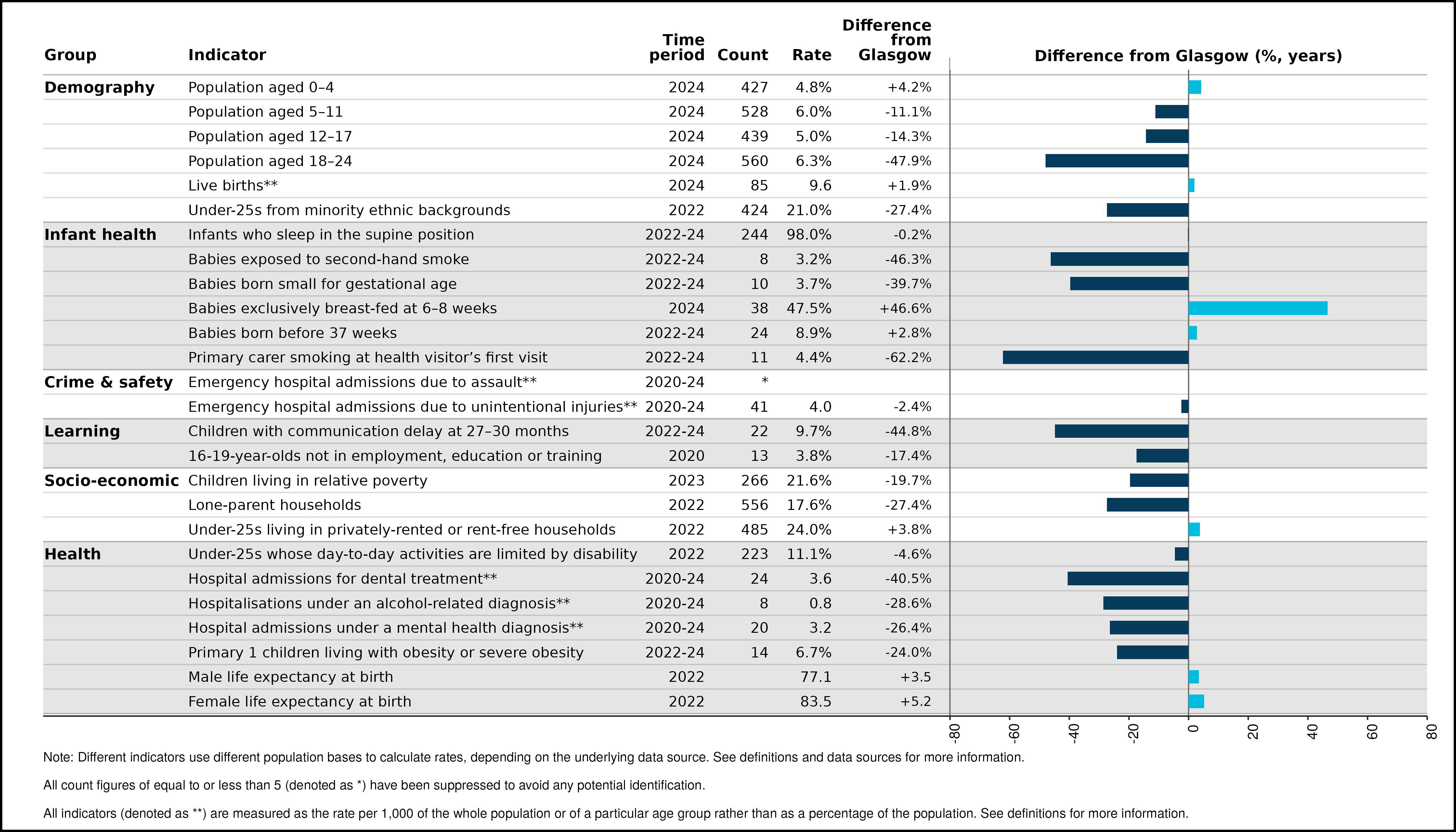
There is a low proportion of 5–24-year-olds living in King’s Park and Mount Florida, particularly 18–24-year-olds which is 48% lower than the Glasgow average. Smoking-related indicators are significantly lower than the Glasgow average, with the percentage of babies exposed to second-hand smoke 46% lower, and primary carer smoking at health visitor’s first visit 62% lower. Hospitalisations under an alcohol-related diagnosis or mental health diagnosis are 29% and 26% lower than the Glasgow average respectively, and the number of Primary 1 children living with obesity or severe obesity is 24% lower. Life expectancy is higher in 2022 for both sexes than the Glasgow and Scottish averages.
Neighbourhood trends
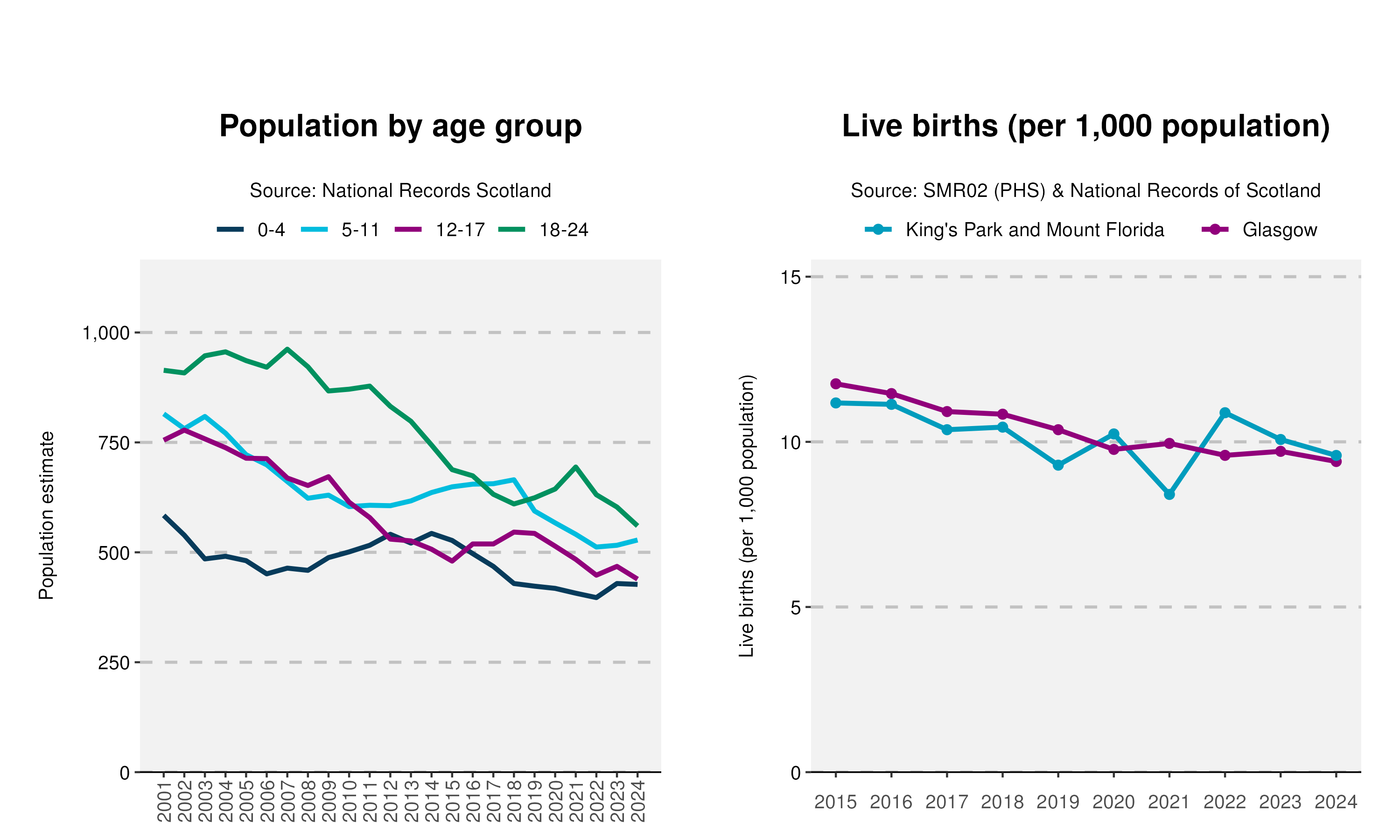
The overall population of this area has fallen by 36% since 2001. This decrease can be seen in all age groups, with the greatest reduction seen in the 12–17 age group (42%). Since 2015, live births have remained just below the Glasgow average, but in recent years they have risen to slightly above it.
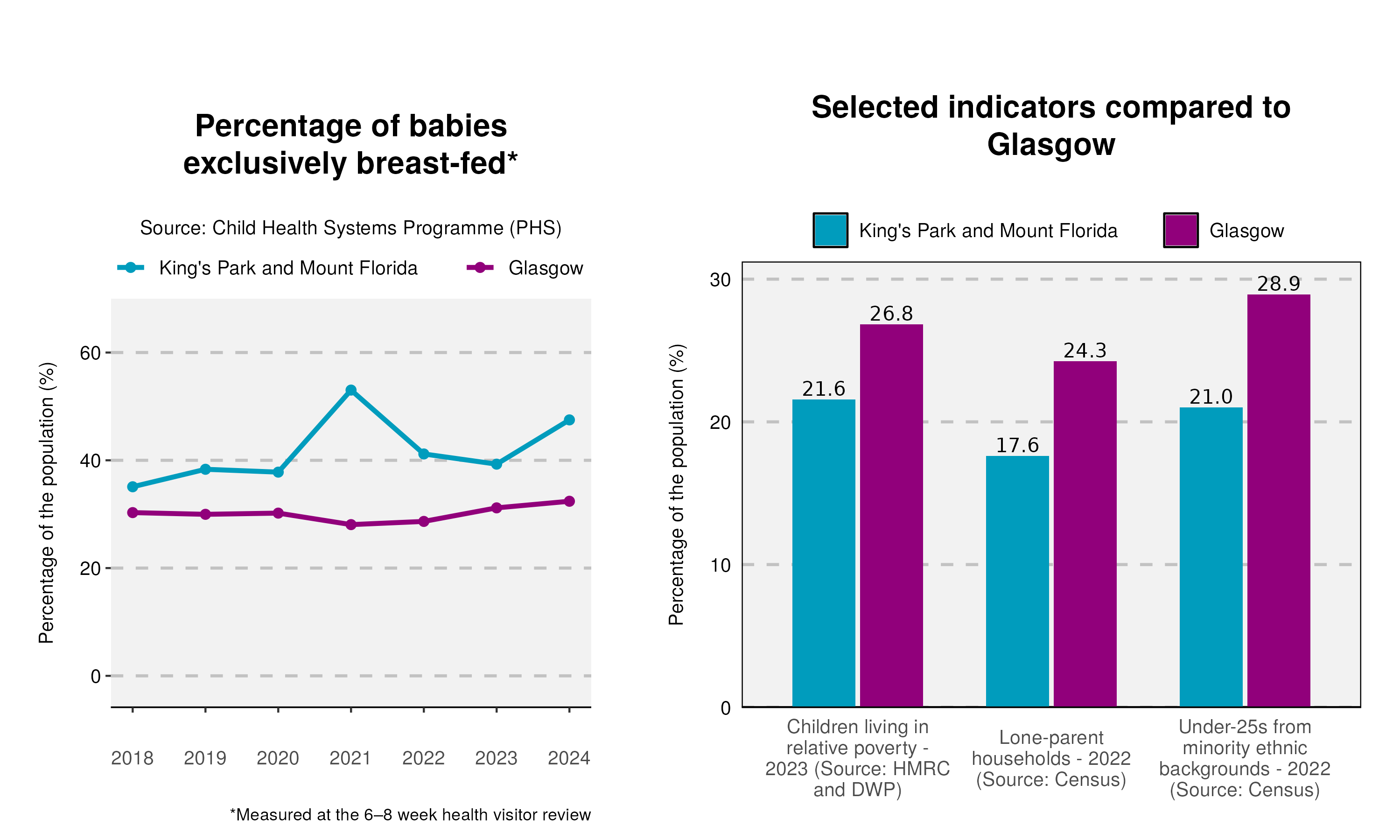
The proportion of babies exclusively breast-fed at 6-8 weeks generally fluctuated above the Glasgow average. The peak in 2021 was due to an increased percentage of live births in the area. The percentage of children living in relative poverty, lone-parent households and under-25s from a minority ethnic background are all below the Glasgow average.
Notes
An Excel workbook containing the data used in all of the profiles can be downloaded here. This workbook also includes alternative output formats and further breakdowns of some of the variables.
1. Data sources: Scottish Index of Multiple Deprivation (SIMD) 2020; Census (2001, 2011 and 2022); National Records of Scotland (NRS); Scottish Morbidity Records (SMR01 and SMR02); Child Health Systems Programme (CHSP) and CHSP Schools; Department for Work and Pensions (DWP); HM Revenue and Customs (HMRC).
2. All count figures of less than five (denoted as *) have been suppressed to avoid any potential identification.
3. This publication has used small area population estimate data published by the NRS on 24 February 2026. This is presented in the population trend chart and used to calculate life expectancy estimates. The NRS update their small area population estimates and previous estimates on an annual basis therefore this data is only representative of the data published upon this date. For further information see: https://www.nrscotland.gov.uk/publications/small-area-population-estimates-mid-2023-and-mid-2024-2011-data-zones/
4. Life expectancies are calculated based on population estimates and death registrations. 95% confidence intervals have been added on the graphs to the neighbourhood data to give an indication of their accuracy. The 95% confidence interval for the Glasgow and/or Scotland comparison line has been removed due to the size of the population. This resulted in the confidence interval sitting on the data line making it unreadable. The x-axes of the life expectancy graphs give the mid-year for each life expectancy estimate e.g. 2020 represents the life expectancy estimate for the period 2018-2022.
5. A notes and definitions document providing further information on the variables presented in the profile can be found in the Profiles section of the Understanding Glasgow website: https://www.understandingglasgow.com/profiles/children-young-people-s-profiles.